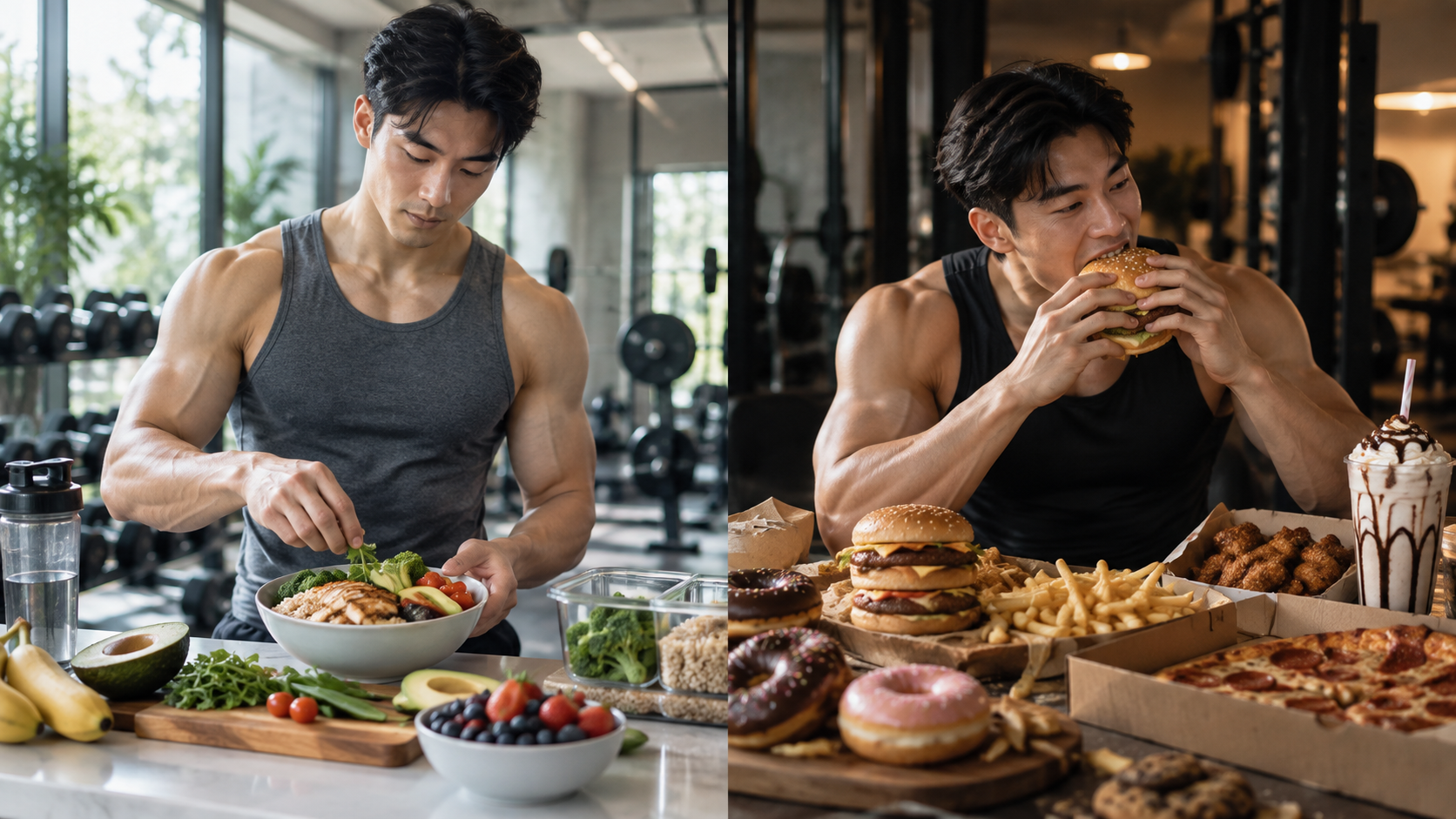
The fitness industry loves a good food myth. Whether it’s demonising entire food groups or pushing unnecessary supplements, there’s always some new “rule” that complicates eating for muscle. At FITLUC, we’ve heard it all. We’re well past being shocked, maybe even desensitised. But here’s what you must know: most of the “must-follow” tips circulating out there are either outdated, misinterpreted, or just marketing. If you’re fed up with conflicting advice and want clarity, this breakdown of the 10 biggest muscle-building food lies will help you simplify your diet, and your progress.
#1 “You can turn fat into muscle.”
This is like expecting your couch to turn into a treadmill, which is to say it is biologically impossible. Fat and muscle are completely different tissues that serve different functions. While you can indeed lose fat and build muscle simultaneously (a process called body recomposition), they do not convert into each other. What’s really happening is that strength training stimulates muscle growth while proper nutrition creates the right conditions for fat loss. The transformation occurs through separate physiological processes, not some magical alchemy.
We unpack the real strategy behind body recomposition in this guide.
#2 “You need to eat tons of protein to build muscle.”
The protein obsession has gotten out of hand—your body can only use so much. Research has shown that 1.6-2.2g of protein per kg of body weight is optimal for muscle growth, and all else beyond this gets burnt for energy or stored as fat. That said, your muscles aren’t endlessly greedy for protein, but rather need consistent, adequate amounts paired with proper training. To think more is better isn’t as accurate as saying it’s just more expensive urine and unnecessary digestive stress. Yes, too much protein can cause diarrhoea, indigestion, and flatulence, due to sulfur and various compounds found in protein shakes and supplements.
#3 “Only animal protein builds real muscle.”
The growing number of jacked vegans are proving that this myth is wrong. While animal proteins are complete (containing all essential amino acids), plant-based proteins can be just as effective when combined strategically. The key is variety and total intake. Foods like tofu, tempeh, quinoa, and legumes can absolutely support muscle growth when consumed in proper amounts. Your muscles respond to amino acids, period.
#4 “Carbs are unnecessary for muscle growth.”
Carbohydrates are actually your muscles’ preferred fuel source during intense training, and they play a crucial role in recovery by replenishing glycogen stores. Without adequate carbs, you’ll likely feel weaker in the gym and recover slower between sessions (explains a lot?). They also help spare protein from being used as energy, allowing more to be used for muscle building. Unless you’re prepping for a bodybuilding show, there’s no need to fear quality carb sources.
Decode your needs based on your fitness goals. Learn what you should be eating based on your workout type.
#5 “Junk food is essential to bulking.”
The “dirty bulk” approach is just lazy nutrition disguised as strategy. Although calorie surplus is necessary for muscle growth, consistently eating low-quality foods leads to poor recovery, excessive fat gain, and potential health issues. Nutrient-dense foods support better training performance, recovery, and body composition. Sure, there’s room for flexibility—but making processed foods the foundation of your diet is like trying to build a house with cardboard. It might look big, but the structure won’t be quality.
#6 “Only clean foods work for building lean muscle.”
On the flipside, this rigid thinking also creates an unhealthy relationship with food. What matters most are your total calories, protein intake, and micronutrient sufficiency, and not whether every food meets some arbitrary “clean” standard. Obsessing over food purity can lead to unnecessary stress and disordered eating patterns, both of which can derail your progress. Sustainable muscle building comes from consistency and not perfection. The lesson is clear: your body doesn’t operate on binary “clean” or “dirty” classifications.
#7 “Intermittent fasting ruins muscle gains.”
Your muscles aren’t checking the clock; they respond to total daily nutrition. Research shows that meal timing matters far less than hitting your protein and calorie targets over the course of the day. Intermittent fasting can be perfectly compatible with muscle growth as long as you consume adequate nutrients within your eating window. Just make sure you’re not accidentally undereating—your muscles care about what and how much, not necessarily when you eat.
#8 “You can’t gain muscle in a calorie deficit.”
While it’s challenging, it’s absolutely possible—especially for beginners, those returning to training, or overweight individuals. This process, called body recomposition, works best with high protein intake, intense strength training, and a modest calorie deficit. The leaner you become, the harder this gets, but dismissing it entirely ignores the science of novice gains and metabolic flexibility. Progress might be slower than in a surplus, but the dual transformation is absolutely possible and achievable.
#9 “More food = more muscle.”
If this were true, competitive eaters would be the most muscular athletes. Your body has a genetic limit to how much muscle it can synthesise monthly (about 0.5-2 lbs for most is the consensus established by experts). Excess calories beyond what’s needed for growth simply become fat. A moderate surplus of 2,500 calories a week is sufficient. Usually, anything more just creates unnecessary fat gain that you’ll have to lose later. Muscle growth is a marathon, not an all-you-can-eat buffet.
#10 “Protein shakes are better than food for muscle growth.”
Supplements should complement, not replace, real food. That’s why they’re called supplements. Whole food sources provide a complex matrix of nutrients, fibre, and phytochemicals that support overall health and recovery. We won’t deny that protein powder is convenient, but it lacks many of the synergistic compounds found in whole foods that support digestion, immunity, and long-term wellbeing. Your body also benefits from the mechanical process of chewing and digesting solid food. Think of shakes as a useful tool, not a superior solution.
FITLUC Fuels Your Biceps and Your Brain
Now that you know the truth behind these muscle-building myths, it’s time to put that knowledge into action. But why go at your fitness journey alone when you can have expert guidance? At FITLUC, our certified fitness trainers combine nutritional science and sports performance expertise to create a plan tailored to your body, goals, and lifestyle, leaving no room for misconceptions or doubts.
Whether you want to build lean muscle, burn fat, or optimise your diet, our team will help you cut through the noise and get real, sustainable results. Speak to a FITLUC trainer today and start fuelling your gains the right way. Your strongest, healthiest self is waiting. Let’s start off on the right foot.