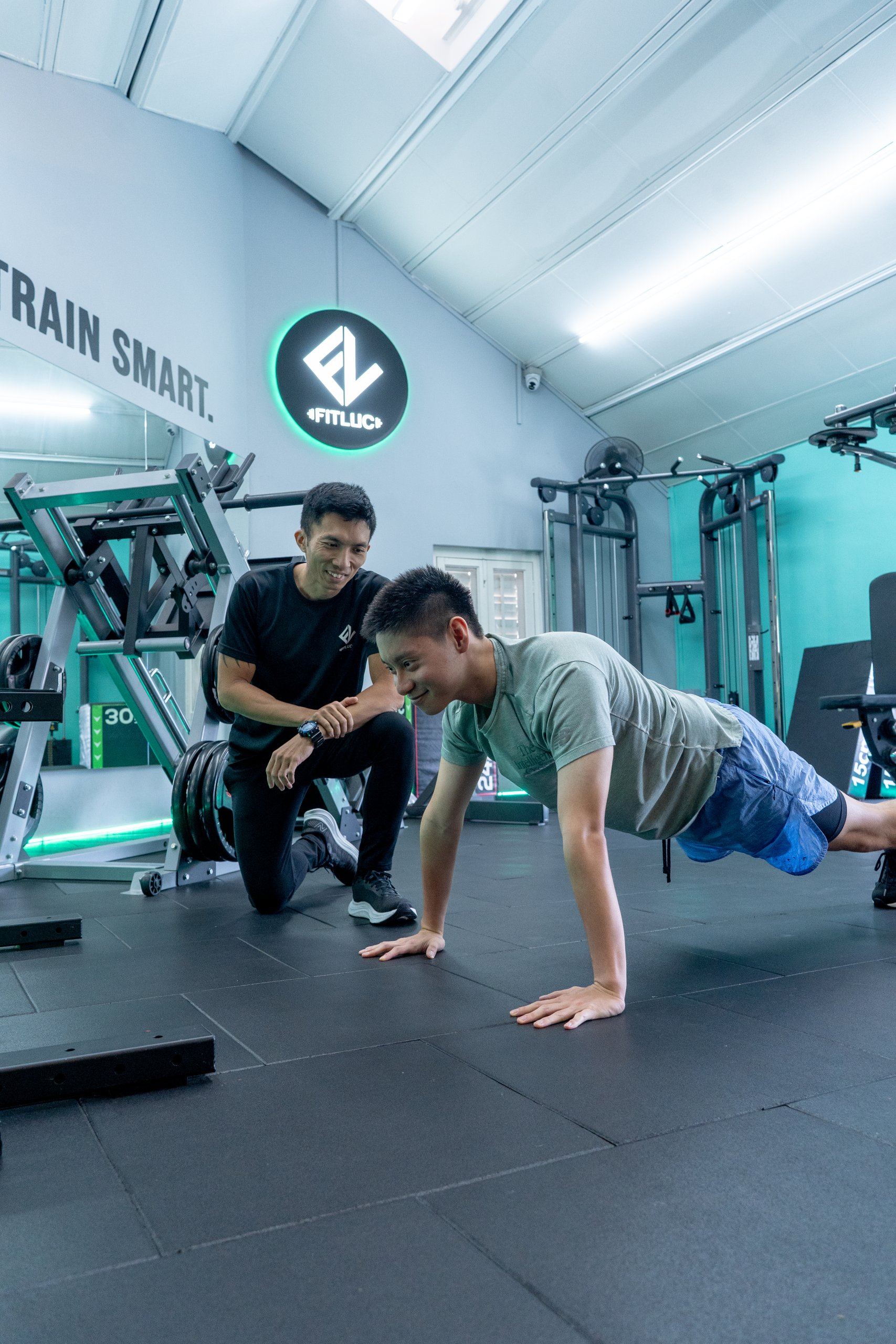
If there’s one thing we’ve learnt from years of working alongside physiotherapists and their discharged patients, it’s that “cleared” and “ready” are two different words doing two different jobs. Physiotherapy does the heavy lifting after an injury or surgery, such as managing pain, restoring movement and getting you functioning again under expert eyes. But what it doesn’t always do, and frankly was never built to do, is hand you back the strength and conditioning to perform, whether that’s on a pitch, in a gym or just carrying shopping up four flights without your knee complaining.
Here’s what fills that space, piece by piece.
Physiotherapy Restores Function, But Not Full Strength or Performance
Physiotherapy gets you moving again, and it does that job well. It reduces pain, restores range of motion and rebuilds the basic mechanics needed to get through a normal day without wincing every time you stand up from the sofa. However, what it doesn’t reliably do is restore the strength, power and conditioning required for sport, serious training or physically demanding work.
Studies have found that in the short term following ACL reconstruction, quadriceps weakness is common. As such, activity levels decline and quality of life can take a hit, often well after the formal programme has wrapped. A PMC review noted that strength deficits often persist after formal treatment ends. This sometimes extends far longer than the discharge paperwork would suggest. Thus, the clearance you receive marks the end of a phase but should not be taken as the resolution of every issue the injury created. To close that gap, quadriceps strength typically needs to be brought back within 10% of the uninjured leg, a target reached through structured resistance training involving progressive overload, single-leg strength work and movement pattern retraining, to name a few.
Getting signed off is a real milestone. We’ll never tell a client otherwise. But it is one stage of a longer process, and the next one is still waiting.
Who Benefits Most from Structured Post-Rehab Training?
Not every recovery requires the same level of follow-up, but certain groups can benefit from structured post-rehab training more.
- Athletes and former athletes returning to competitive sport. The demands on return are considerably higher than anything physiotherapy was designed to prepare you for.
- Anyone recovering from a significant joint injury. ACL reconstruction, rotator cuff repair and major fractures will take longer to resolve to pre-injury capacity through clinical rehab alone.
- People with physically demanding jobs. Tradespeople, hospitality staff and anyone on their feet or lifting throughout the day needs more than “functional” to get through a shift safely.
- Anyone simply trying to get back to their old training intensity. The distance between “I can walk fine” and “I can train like I used to” is bigger than most people assume.
Read: Are You Overtraining? 10 Signs You Might Be Pushing Too Hard
Reducing Risk of Re-Injury Through Progressive Loading
Here’s our honest advice on this one: don’t let the calendar make this decision for you. Many people feel fine at the three-month mark, only to find out later that they never returned to their previous levels or still aren’t there even after significant time has passed.
Re-injury rates also back this up more than we’d like. Research published in the American Journal of Sports Medicine found that the rate of needing a second ACL reconstruction within 24 months is six times higher for those who’ve already had one, compared to someone who’s never torn their ACL. Lingering strength deficits are a contributor. Strength doesn’t catch up on its own because of something called arthrogenic muscle inhibition, which is a protective reflex where the nervous system reduces signal to the quadriceps around an injured knee even once the tissue has healed. The muscle is physically capable, but the brain isn’t fully switching it on. Introducing post-rehab training here helps break that inhibition by retraining the nervous system to fully activate the muscle again.
The early weeks back are best treated as a negotiation with your own body, not a victory lap. With a structured programme, clear benchmarks are set for you, so progressing to the next phase depends on what your body can do instead of how many weeks have passed since the operation. That’s the buffer that keeps a successful recovery from turning into a second injury.
Addressing Muscle Imbalances and Movement Compensation Patterns
Injuries are rarely tidy, and bodies are remarkably good at compensating without telling you. During recovery, the load quietly shifts onto the good side, neighbouring muscle groups or entirely different movement patterns, and none of that switches itself off the moment the pain does. In other words, your body might still be running the workaround even after the original problem has been fixed.
For example, someone who’s “fully recovered” can still favour one side without realising it. Persistent strength deficits alter knee and hip biomechanics and reduce functional performance, even in patients officially cleared to return to activity. It takes a trained eye to spot this, and progressive, targeted strength work to actually correct it.
That is how someone with a knee injury can end up with a hip or lower back problem a year later, if the compensation pattern that got them through rehab was never given enough attention and fixed.
Bridging the Gap Between Clinical Rehab and Real-World Demands
Physiotherapy is, by design, predictable. But real life doesn’t always return the favour.
Sudden changes of direction, unpredictable loads and fatigue under pressure are all present the moment someone returns to a court, a pitch or a physically demanding workday, and none of them feature in a typical rehab programme. This is why patients can clear every physiotherapy milestone and still struggle in their first match or session back. Nothing in their rehab required the body to react to something unplanned.
Post-rehab training lives in exactly that gap—it aims to build the capacity to handle the conditions clinical rehab was never designed to recreate. Without it, the first real test the body faces post-recovery is often the only one it gets, and that’s a fairly unforgiving way to find out you weren’t quite ready.
Building Confidence and Psychological Readiness

Your body might be ready before your head is, and we’d argue this is the part most people underestimate the most. We’ve trained people who, on paper, had every reason to feel confident again, but still flinched the first time someone came near their knee in a drill.
One study following male athletes after ACL reconstruction found that despite a 91.7% return-to-sport rate, high kinesiophobia (a fear of getting hurt again) was present in 56.7% of the cohort at long-term follow-up, including plenty who’d already made what looked like a successful comeback. That fear isn’t just an emotional footnote either. It changes how people move, from hesitation, guarding to subtly altered mechanics, all of which is counterproductive to the stability and confidence the joints need to stay protected.
Structured post-rehab training, with its gradual ramp-up and its focus on proving capability rather than just clocking time, tends to be one of the better ways to rebuild that trust. Confidence can absolutely be earned in small reps, and it is in fact more durable than falsely declaring it on day one.
Read: Personal Training vs Group Training: How to Figure Out Which Workout Style is Better for You
Optimising Long-Term Physical Performance and Resilience
Recovery doesn’t have to mean clawing your way back to exactly where you were. Done well, post-rehab training is a genuine opportunity to come back stronger and address whatever weaknesses might have contributed to the injury in the first place. This matters more than it might seem, since the same neuromuscular and biomechanical issues that caused the original injury, whether that’s a strength imbalance, poor movement control or compensatory loading patterns, will keep putting the body at risk unless they’re specifically addressed rather than simply allowed to “heal”. The offending patterns and structural weak points will continue to resurface until they are removed, which then allows the body to return to activity, more resilient than ever.
Plus, some of these deficits resolve extremely slowly without help. Evidence shows that quadriceps strength deficits can persist for up to two years after ACL reconstruction without targeted intervention, which is a long time to be running on a deficit you didn’t know you still had.
A well-built programme helps to close the distance faster. Furthermore, it leaves people more capable than they were before the injury ever happened, which is a much better outcome than simply limping back to baseline and calling it a win, don’t you think?
Physiotherapy Is the Foundation, But Not the Finish Line
Recovery does not wrap up the moment a physiotherapist waves you off, and we’d know, having sat across from plenty of clients who learnt this the hard way. What happens next—rebuilding strength, ironing out compensations, slowly trusting your own body again—is where a complete recovery either happens properly or secretly stalls out somewhere around month four.
That’s precisely the rift FITLUC’s post-rehab personal training is designed to bridge. Trials pick up exactly where your physiotherapy left off, led by personal trainers who understand progressive loading and movement compensation as well as they understand the psychological side of stepping back into activity after injury. Every plan is shaped around your specific recovery stage, your goals and the condition you’re hoping to return to, or even surpass. Get in touch with us and let’s sort out what the next stage of your recovery actually looks like.