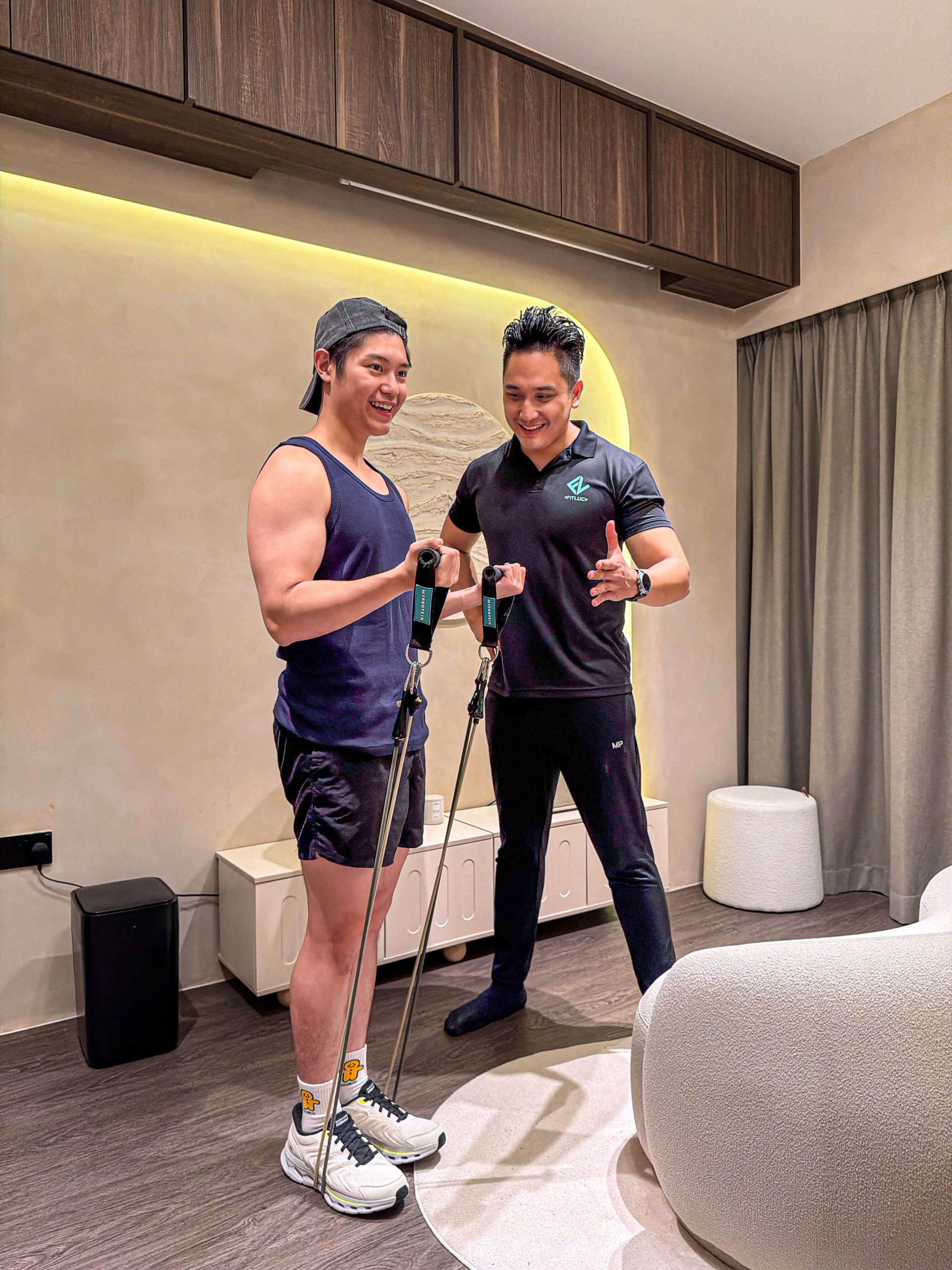
The home personal training market has never been more crowded, which is both a good thing and a slightly overwhelming one. More options mean more opportunities to find someone suited to you, but it also means a greater chance of ending up with a trainer who looks great on Instagram and does very little for your squat.
Here’s how to choose wisely.
Weighing both gym PT and home PT? Head over to 10 Things to Look for Before Committing to a Personal Training Gym for what to consider on the other side.
1. Understand Your Fitness Goals
Before you start searching for a trainer, you need to get clear on what you actually want. Weight loss, muscle building, post-injury rehabilitation, improved mobility, pre- or postnatal fitness—these all require different specialisations. A trainer who excels at powerlifting prep may be entirely the wrong choice for someone recovering from a knee replacement. Knowing your goal sharpens your search considerably and helps you ask the right questions when you make contact.
2. Decide Between Online and In Person Training
Online coaching suits people who are self-motivated, comfortable with video calls and want the most flexibility. In-person home training suits those who benefit from real-time correction, hands-on accountability and a personal trainer who can physically see how your hip is tracking during a lunge. Both formats have merit and the right answer ultimately depends on your learning style, your schedule and how much you trust yourself to follow through without someone in the room with you. Know thyself, then book accordingly.
3. Check Qualifications and Certifications
A personal training certification is the baseline. An AFA-certified personal trainer credential is one example of a well-regarded qualification here in Singapore. Nevertheless, the best trainers tend to hold more than one qualification. Depending on your needs, additional credentials in sport science, corrective exercise, pre-and post-natal fitness, or strength and conditioning can make a significant difference to the quality of your programme. Check that their insurance is current and their CPD (continuing professional development) is ongoing. A good trainer keeps learning—after all, the science keeps moving.
4. Look for Relevant Experience
In the same vein, while qualifications confirm competence, experience confirms it in practice. A trainer who has worked with clients similar to you, whether that’s older adults, athletes, new mothers or people managing chronic pain, will bring context that a newly certified trainer simply hasn’t yet accumulated. Ask directly: have you worked with clients dealing with X? What were the results? Specificity in the answer is a good sign (vagueness is not). It’s also worth considering trainers with experience in seemingly adjacent fields. For instance, a former competitive athlete or an ex-dance coach can introduce discipline, body awareness and programming instincts that no certification alone can bestow.
5. Assess Communication Style
Some people thrive under direct, no-nonsense coaching. Others respond better to encouragement, patience and a gentler approach. Neither style is superior—the question is which one works for you. Pay attention to how a trainer communicates during your first consultation. Do they listen properly, or are they interrupting you? Do they explain movements clearly? The most successful trainers tailor their communication as readily as they tailor their programmes. It’s part of what keeps clients coming back.
6. Evaluate Training Approach
A trainer’s methodology matters more than their playlist. Ask how they structure programmes, how they handle progress plateaus, and whether they incorporate mobility work, recovery and periodisation into their plans. A trainer who simply makes you sweat without a coherent structure is doing you a disservice. Evidence-based practice, progressive overload and individualised programming are the hallmarks of someone who actually understands the science behind what they’re prescribing.
Read: Are You Overtraining? 10 Signs You Might Be Pushing Too Hard
7. Consider Scheduling, Location and Availability
Consistency is the backbone of any fitness programme, and consistency requires a schedule you can keep to. Your trainer should be adapting to your routine, not competing with it. If sessions are in-home, make sure they service your area and can get to you on time, consistently. A trainer who is perpetually late or difficult to rebook will chip away at your motivation faster than any tough session ever could. Yes, logistics are dull, but they matter enormously.
8. Compare Pricing and Value
Home PT rates vary considerably, typically ranging from $160 to $200 per session in Singapore depending on location, experience and what’s included. The cheapest option is rarely the best value, so make sure to ask what’s covered so you’re not shortchanged by a good rate and a thin service. Is it just the session itself, or programming, check-ins, nutritional support and progress tracking too? A trainer charging $200+ who provides a comprehensive service often delivers better return than the cheapest one offering little beyond showing up.
9. Read Reviews and Testimonials
Client reviews offer something no CV can: candid feedback from real people who’ve paid for the same service you’re considering. Look for patterns rather than individual data points. A handful of glowing reviews means fewer than 20 consistent ones. Equally, a single bad review among 50 positives is probably worth taking with a pinch of salt. If a trainer has no reviews at all, ask directly for references. Any confident professional should be able to provide them.
10. Ask for a Trial Session
Reading about a trainer is useful; training with one is revealing. Book a trial and treat it as an audition. Good trainers arrive prepared, coach well under pressure, and, crucially, run some form of assessment before touching your programme (if this hasn’t been gone through in an initial consultation). Come with questions and pay attention to how they’re answered. While they may seem like minor details, each one is a reliable indicator of the effort and care a trainer brings to their work.
Bonus: Trust Your Instincts!
All the due diligence in the world cannot fully replace your gut feeling after a session. If something feels off, even if you cannot quite articulate why, don’t dismiss it. The trainer-client relationship is built on trust, and trust requires a genuine sense of comfort and confidence in the person guiding you. You are going to be sweating, struggling and being corrected in your own home. You need to feel safe, respected and understood. Qualifications matter, but chemistry matters too.
Why FITLUC’s Home PT is Different
FITLUC was built on the principle that home personal training should be trustworthy, safe and as effective as any other mode of PT. Every trainer on our roster is fully qualified, insured and vetted, so the person arriving at your door knows exactly what they are doing. We hold each session to a high standard because anything less is not worth your time. Find out more about our Home PT.
Our trial session goes well beyond a workout. It includes a full body composition analysis, a personalised exercise plan and nutritional guidance, giving you a clear, complete picture of where you are, how you can move forward and where you will eventually end up with top-tier coaching. Book your FITLUC trial session today. With us, your home will become the best gym you’ve ever trained in.