You know you are no longer 25 when a low sofa starts to feel like a mental tug-of-war. What took no thought a decade or two ago now comes with a groan, on the way down and again on the way up. Somewhere along the way, a question creeps in. Should I have worked on my strength sooner?
Muscle begins its slow retreat from around the age of 30. The decline is easy to miss, and just as easy to ignore, until the day it forces you to think about it. The good news is that lost strength is not gone for good, and it can be rebuilt. Here is what happens to your muscles over the years, why strength training (for both men and women) matters more with each one, and how to get properly started.
Wondering where to begin, and how hard to push? A PT trial with FITLUC puts a trainer beside you from the first session, with a programme built around your age, your history and your joints. A body composition assessment and nutritional guidance come with it, so you know exactly where you are starting from.

Still weighing it up? Drop us a message, no strings attached, and we will answer whatever is holding you back.

What Happens to Your Muscles as You Age?
From around the age of 30, the body loses muscle at an estimated 3 to 5 per cent per decade, and the pace picks up after 60. This gradual loss of muscle mass and strength is called sarcopenia, and it can affect balance, mobility, metabolic health, and ultimately, our ability to remain independent as we get older.
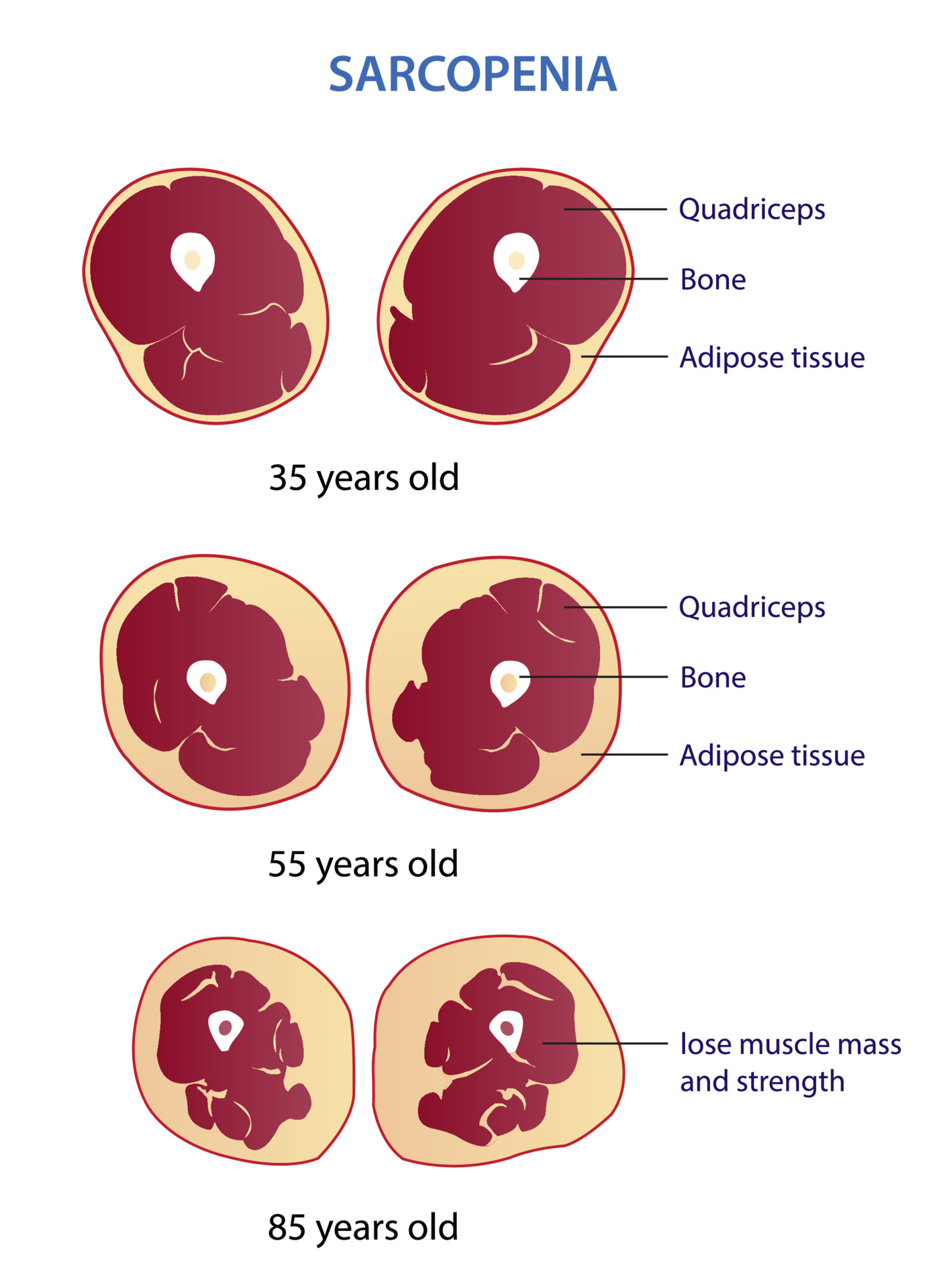
Strength usually falls faster than muscle size. That is why the mirror is often the last place you notice it. Daily life gives the game away first. Everyday activities may become progressively more demanding, with tasks such as climbing stairs, opening jars and rising from a seated position requiring greater physical effort.
Why Strength Training Becomes Increasingly Important as You Get Older
Muscle does far more than fill out a shirt. It plays an important role in supporting balance, protecting the joints, regulating blood sugar and maintaining a healthy metabolism. Strength training also places beneficial stress on the bones, helping to maintain bone density, while stronger legs improve stability and reduce the risk of falls. Together, these benefits help preserve mobility, independence and quality of life as we age.
Muscle also needs the right fuel. Here is how much protein you need per day, by goal.
Is It Ever Too Late to Start Strength Training?
No. Muscle stays adaptable into old age and responds to resistance training at any stage of life. Early gains come largely from the nervous system learning to recruit muscle fibres more efficiently, so strength often improves within weeks. Because those early gains come from learning the movement, there is no need to start heavy. Begin light, build up gradually, and check with your doctor first if you have a heart condition, a joint replacement or any other chronic health condition.
One Berlin study of nursing-home residents aged 77 and older with impaired mobility found that eight weeks of lifting twice a week improved mobility scores by 24 per cent, and the weight they could handle on the rowing machine and leg extension roughly doubled.
If residents of that age and mobility can build strength in two months, most adults, encouragingly, have plenty of room to improve.
Starting later in life is easier with an experienced trainer beside you from the first session. A PT trial with FITLUC gives you a programme built around your age, your history and your joints.
What Are the Best Strength Training Exercises for Older Adults?
You do not need a complicated programme. A handful of movements that mirror daily life, performed with control, will take you a long way. Begin with bodyweight or light loads, and add resistance once each exercise feels steady.
Lower-Body Strength Exercises
Strong legs decide how steady you feel on a staircase, a pavement or a bus that brakes without warning. Begin here.
- Sit-to-stand. Rise from a sturdy chair without using your hands, then lower back down slowly. It is a squat in its most practical form.
- Glute bridge. Lying on your back, press through your heels and lift your hips to strengthen the glutes and the backs of the legs.
- Step-up. Step onto a low, stable platform and back down with control. It builds the single-leg strength that stairs demand.
- Calf raise. Rise onto your toes while holding a countertop for support, which helps with walking and balance.
- Leg press. A machine option that lets you load the legs safely while your back stays supported.
Upper-Body Strength Exercises
Your upper body handles the lifting, carrying and pushing, from shopping bags to getting yourself up off the floor. A few well-chosen movements cover it.
- Wall or incline push-up. Press away from a wall or bench to build the chest, shoulders and arms at a manageable angle.
- Seated row with a resistance band. Pull the band towards your ribs to strengthen the upper back and support better posture.
- Light dumbbell shoulder press. Press weights overhead from a seated position for shoulder strength and easier access to the top shelf.
- Bicep curl. Simple, effective and handy for carrying bags.
- Lat pulldown. A machine movement that builds the back muscles responsible for pulling.
Core and Functional Strength Exercises
Your core links the upper and lower body, and functional exercises train the movements you repeat every day, whether you have noticed or not.
- Dead bug. Lying on your back, lower the opposite arm and leg while keeping your lower back steady. It trains core control without straining the spine.
- Bird dog. On hands and knees, extend the opposite arm and leg to build balance and back stability.
- Farmer’s carry. Walk while holding a weight in each hand. It works grip, posture and core.
- Heel-to-toe walk. Walk in a straight line, placing one foot directly in front of the other, to challenge balance in a way few machines can.
- Modified plank. Hold a plank from the knees or against a bench to build core endurance gently.
Even a simple exercise like the sit-to-stand can be intimidating when you are working around a stiff knee or hip. Have the top trainers by your side when you are finding your feet in the gym. Across our team, you will find:
- Bachelor of Science with Honours degrees in Sport Science and Management from NTU
- Certified personal trainers accredited by AFA, NCSF and ACE
- Certification in CPR, AED and Standard First Aid
- Specialists in rehabilitation and in optimising recovery after exercise
- Experience training some of Singapore’s most recognised faces

Common Equipment Used for Strength Training
You do not need a fully kitted gym to begin, though a gym gives you more room to progress. Here is what you are likely to meet along the way.
- Resistance bands. Light, portable and kind to the joints, they add resistance at home or in the gym.
- Dumbbells. Easy to load in small increments, which suits gradual progress.
- Kettlebells. Useful for carries, swings and goblet squats once the basics feel steady.
- Cable machines. Smooth, adjustable resistance for rows, presses and pulldowns.
- Weight machines. Guided movement paths that let you focus on effort instead of balance.
- A sturdy chair or step. Often all you need for sit-to-stands and step-ups.
If you would like to begin at home, our D-handle resistance bands are a joint-friendly first purchase.
Never set foot in a gym? Here is what to expect on your first visit.
How Often Should Older Adults Strength Train?
Guidelines for older adults recommend muscle-strengthening activity on at least two days a week. Where you land beyond that depends on your circumstances.
- Brand new to strength training. Two sessions a week on non-consecutive days, with light loads while you learn the movements.
- A few months of consistent training behind you. Two to three sessions a week, which leaves room to progress and time to recover.
- Already active through walking, golf or swimming. Add two strength sessions and give them their own slot in the diary.
- Managing joint stiffness or arthritis. Two sessions a week with lighter loads and slower movements, once your doctor has agreed.
- Returning after injury or surgery. Wait for your physiotherapist’s clearance, then build up gradually with a trainer who knows your history.
- Short on time. Two focused sessions of 30 to 40 minutes are easier to keep up in the long run.
If the trip to the gym is what keeps getting in the way, bring the gym to you. Home PT gives you a trainer, a programme and proper guidance at your doorstep, with each session tailored to your current strength and goals.
Age Stronger and Stay Active With FITLUC
Strength is one of the few things in life that gives back more the longer you keep at it. A few sessions a week now means easier stairs, steadier footing and a much friendlier relationship with the sofa later on. The effort you put in today is what keeps the years ahead active, independent and enjoyable.
Starting is easier with someone beside you, and that is where FITLUC comes in. We have trained seniors up to 84 years old, so we know how to pace a programme for people starting later in life. Your PT trial also includes nutritional guidance and a body composition analysis, which give you a clear starting point and let you watch your muscle build over time.
Prefer to chat first? Get in touch and we will happily answer any questions about starting out before you commit to anything.